Timo Rieke: What Designers Misunderstand About Colour
A design nudge in product design is a way of shaping decisions so people arrive at durable, coherent results. When it comes to colour, that means planning early and developing colour together with material, surface, light and use.
The RAL Trendbox 2025+ makes this approach tangible. It does not present the 15 trend colours from RAL COLOUR FEELING 2025+ as isolated swatches. It shows them across five materials. From plastics to powder-coated metal, textiles and carpet, it becomes clear how strongly surface and material change a colour's effect.
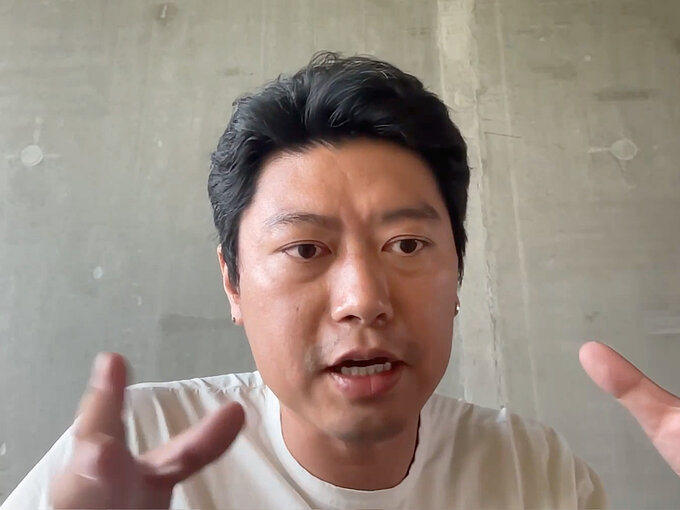
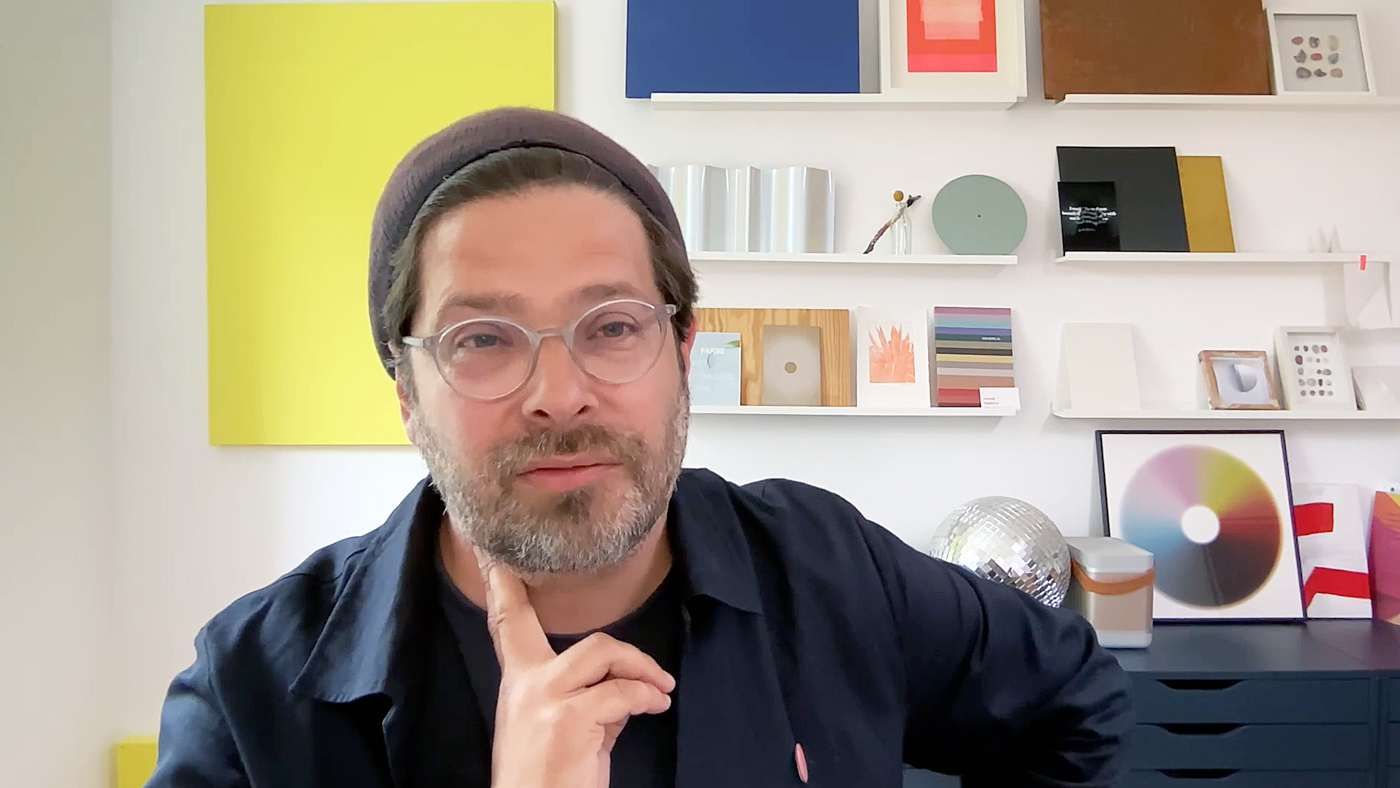
Prof. Timo Rieke helped shape the research behind this perspective. He works as a colour designer and colour researcher and teaches colour design at the University of Applied Sciences and Arts in Hildesheim. He says: "Colour has the power to shape impact."
Rieke explains that colour is often misunderstood. "Colour is fundamental to our perception." A simple experiment makes this clear. Switch your Instagram feed to black and white, and you immediately notice how strongly colour shapes orientation and atmosphere.
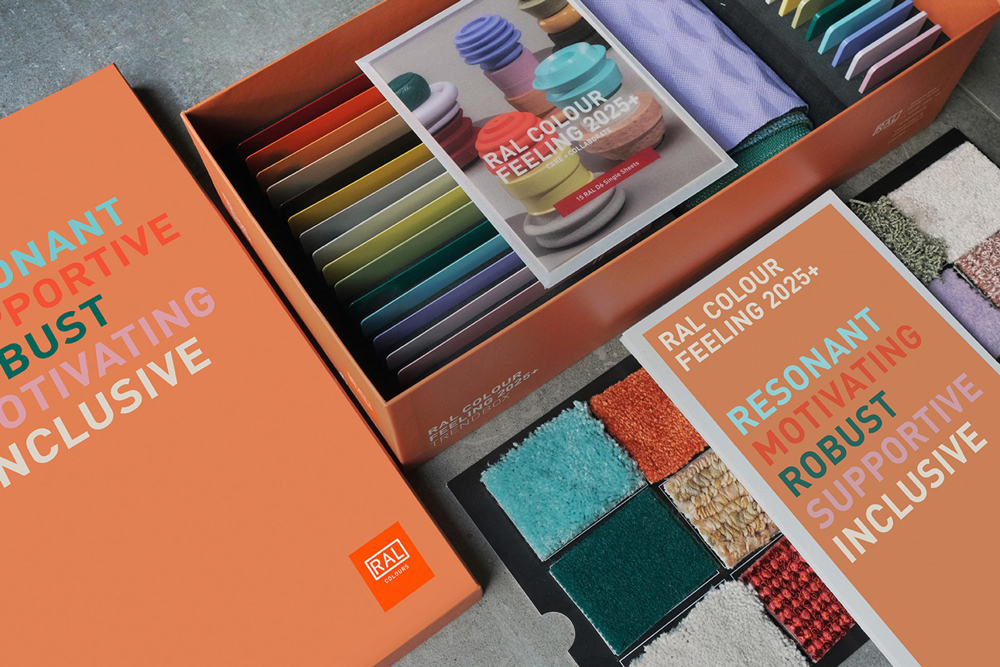
Why the Trendbox Shows More Than Colours
The key point is simple. The same colour changes character depending on material, surface and light. That is why colour does not work as a last-minute fix.
Rieke says: "Designers should not believe they can rescue a project with colour." He often sees colour decisions made only after form, material and construction are finalised. For him, a reliable process works differently. Colour belongs at the beginning, alongside function and use.
The RAL Trendbox 2025+ translates this logic into a working tool. It shows colours where they later operate in reality. This makes colour effects comparable, discussable and testable in context.
"Designers should not believe they can rescue a project with colour."
Against Simple Colour Rules
Colour psychology often offers formulas. Blue builds trust, green calms, red activates. For Rieke, these rules are too simple.
He says: "They are at best a starting point, but not a solution to the problem of colour." Whether a colour calms or activates never depends on hue alone. Material, light, spatial context, cultural references and use all shape perception.
That is why the Trendbox does not ask designers to copy trends. It helps designers explore, compare and develop colour effects within their specific context.
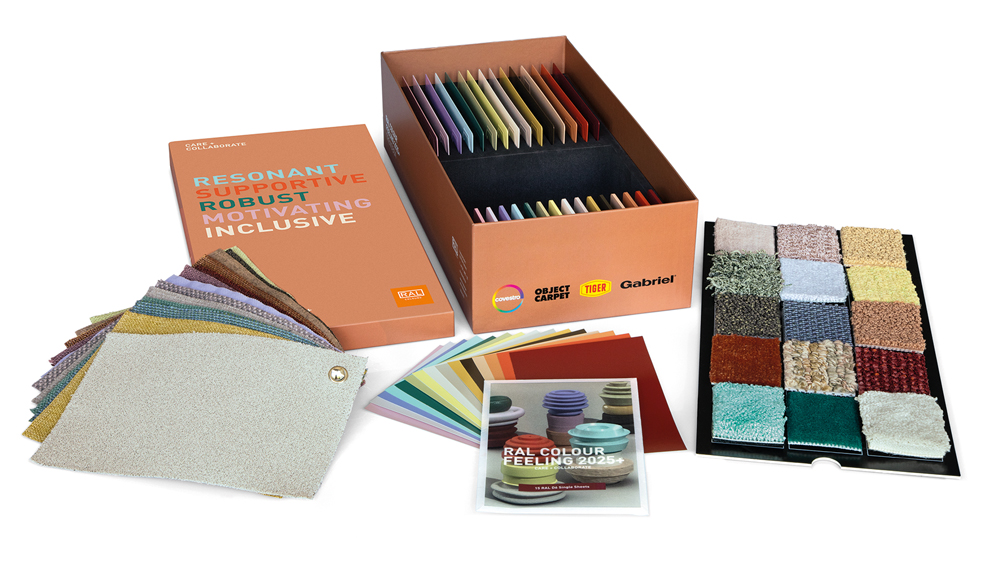
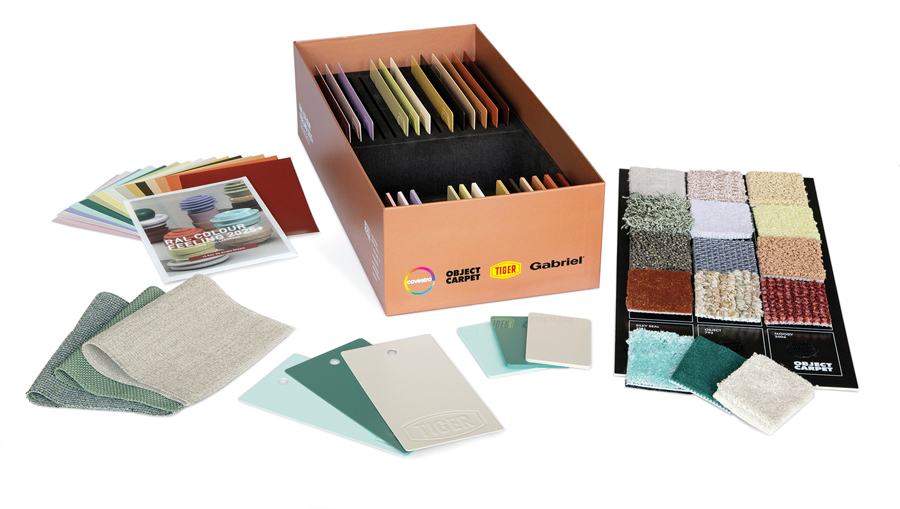
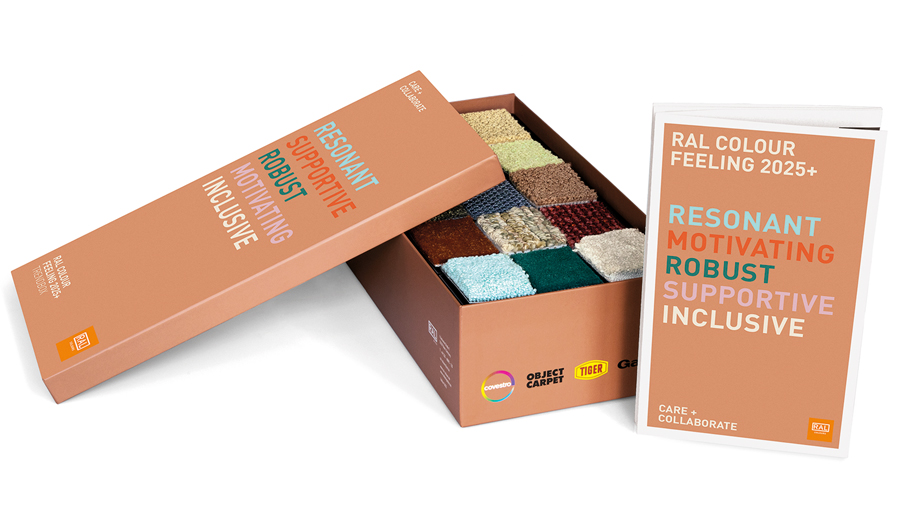
Colour Emerges in Context
A colour can only be assessed reliably in material and in space. This is the principle Rieke keeps returning to.
"In the end, we always have to look at how a colour works in the situation." For him, testing is part of the design process. Good colour design comes from observation, iteration and experience.
The Trendbox shows that colour behaves differently on metal than on textiles or plastics. This makes decisions more robust. Colour shifts from decoration to a strategic design tool.
"In the end, we always have to look at how a colour works in the situation."
Gold for a New Perspective on Colour
With Gold, the jury of the German Design Awards recognised a research and design approach that treats colour as part of a holistic design process. The award highlights a tool that connects perception, material expertise and design.
Rieke says: "Beautiful products are those that consider material and surface from the start." The RAL Trendbox 2025+ makes that principle practical. It shows that future-facing design begins where colour, material and surface are developed together.
How Early Does Colour Shape Your Design Process?
The German Design Awards recognise projects that take a holistic view of design and open new perspectives on material, function and user experience. The RAL Trendbox 2025+ shows how research, material competence and design can work together to change processes in a lasting way.
If your project offers new answers to design challenges, now is the moment: register for the German Design Awards 2027, present your work to an international jury, and become part of a global network of design excellence.