Friedrich Gerlach
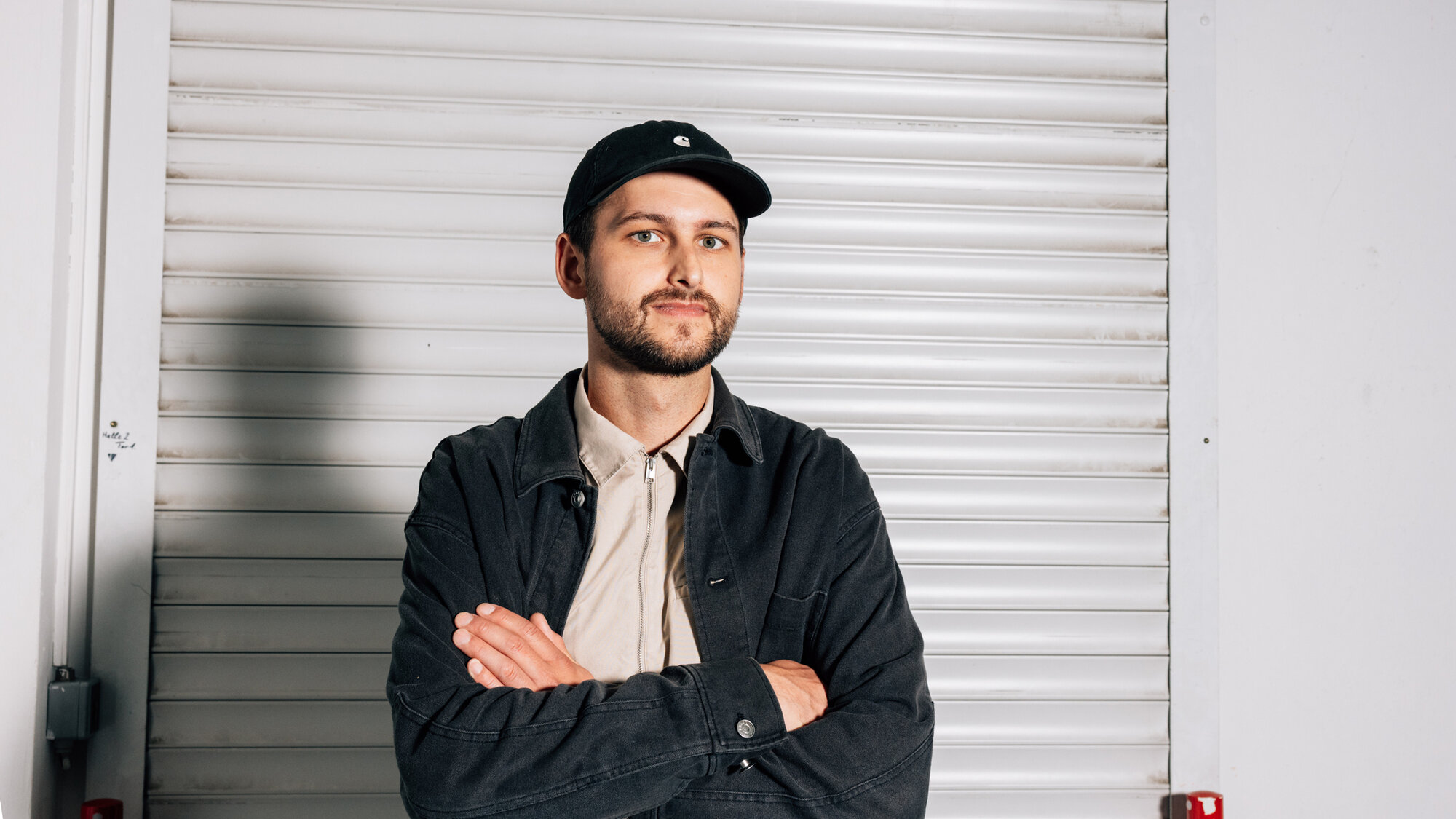
Material Research
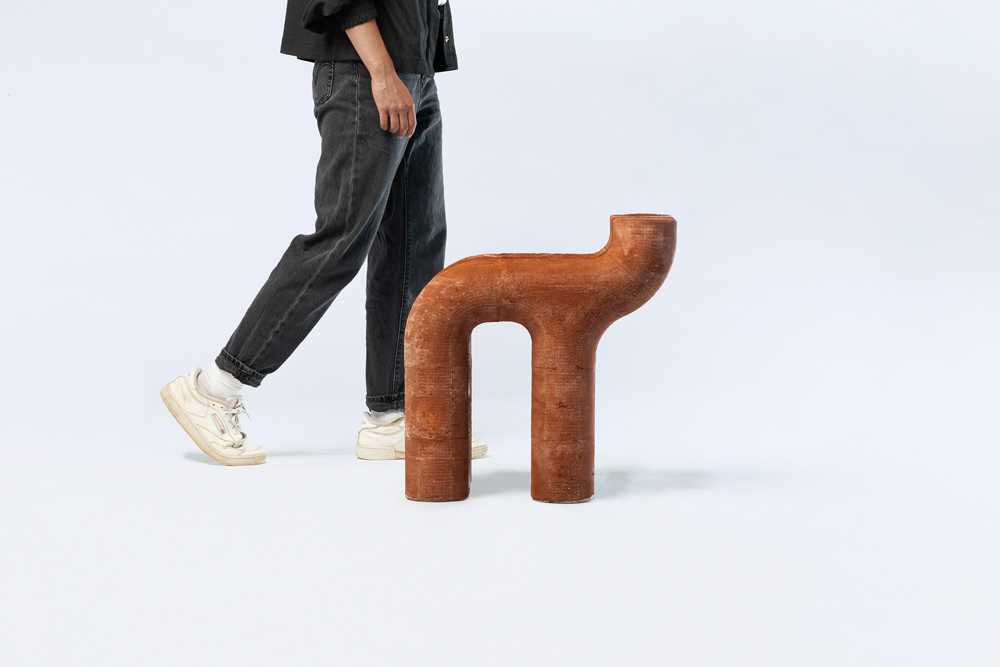
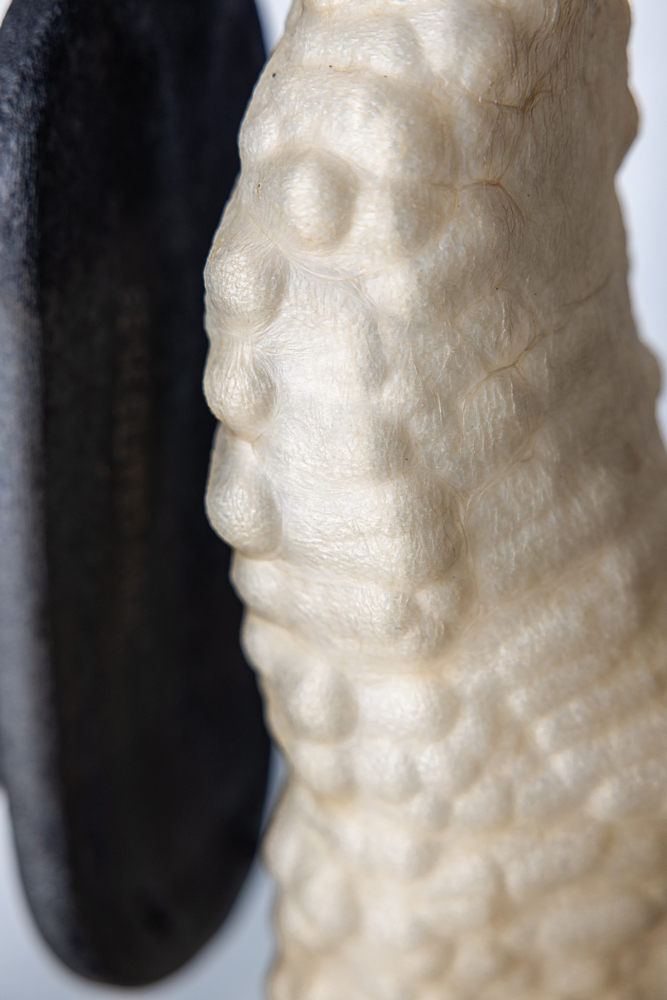
Friedrich Gerlach’s projects often begin with a material or manufacturing process. For the Biocement Chair, developed with Julia Huhnholz, he works with mineral waste that is bound with the help of bacteria. The material does not require firing and is applied in the form of a chair.
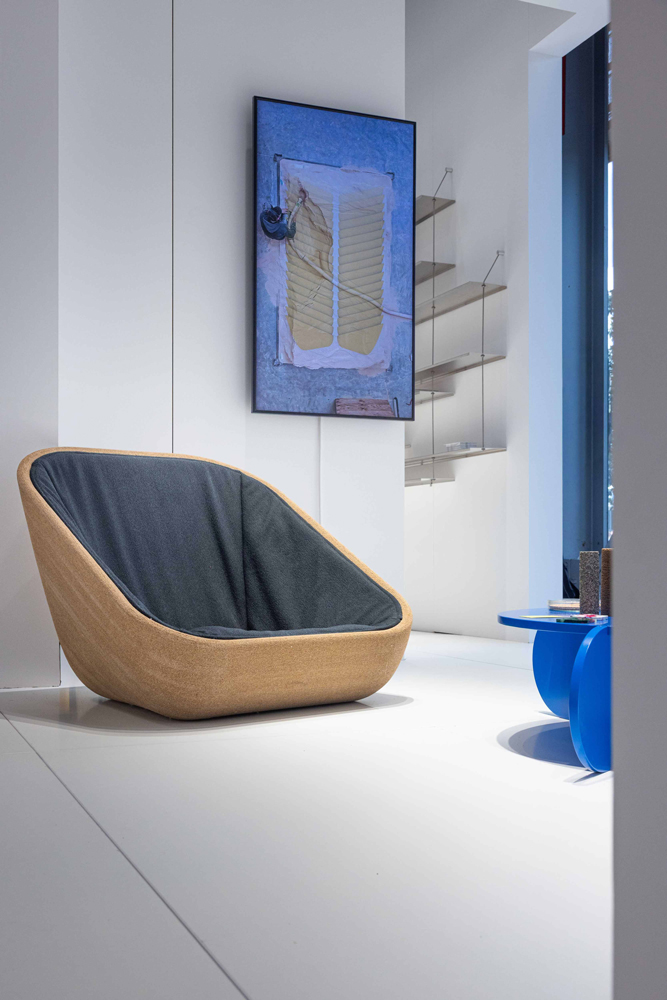
For the Lumo Sofa, seat shells are 3D printed from a material based on residual sawdust and a mineral binder. The construction combines these shells with a removable wool cover and natural-fibre filling.
Bacterial cellulose is used in Biotic Boot. Bacteria produce the material directly on three-dimensional forms, which are regularly moistened during the growth process. The shoe serves as an application of this manufacturing method. Gerlach studies at Burg Giebichenstein University of Art and Design Halle. His projects range from biofabrication and 3D printing to the reuse of glass and other residual materials.
Your projects often begin with a material or a manufacturing process. How do you decide which subject to pursue?
My projects almost always begin with a research phase. I look at production processes in companies, visit research institutions, read papers and review the current state of research, and look for existing problems. I find it easy to build bridges, for example to other technologies, between disciplines and to topics that are deeply embedded in science or a particular process. I translate them into something people can understand and pass on to others. The solution emerges from all of this. And when a material is future-proof and suitable for circular use, I immediately want to keep working with it.
In Biocement, bacteria bind mineral waste materials together. When did you realise it could become more than an experiment?
What Julia and I particularly liked was that this technology brings together so many waste materials. The granulate and the raw materials that the bacteria process further can come almost entirely from secondary sources. Most experiments were still taking place in the lab. We felt it was worth bringing this technology to a wider audience. So we took it out of the lab and built an object for knowledge transfer. Unlike a rectangular block or test specimen, it is something people can talk about. In exhibitions, it draws public attention to the technology.
What is the biggest challenge in turning a new material into a product suitable for everyday use?
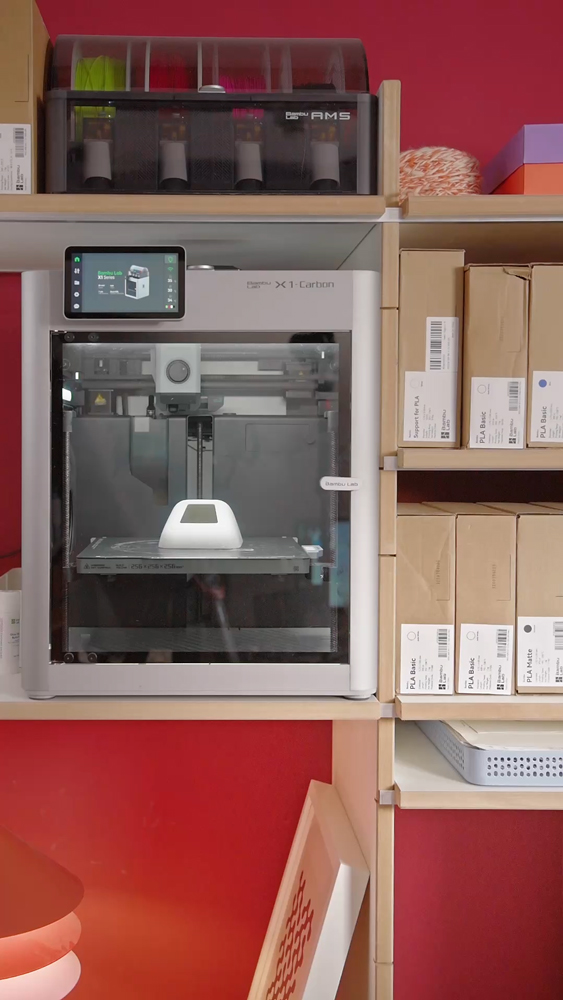
Every new material comes with new requirements and possibilities. You have to understand them, including what they mean for production. In 3D printing, you adapt the geometry to the process, just as you do with older methods. There is also the question of how to join a new material with others and separate them again later so that it remains suitable for circular use. Many technologies are so new that they are still at the research stage, and transferring them into industry takes a very long time. That is precisely where I see my role: making the new possibilities visible and thereby driving change forward.
How do you assess whether a new material really is more sustainable than an existing solution?
Whenever possible, I visit the material's production facilities and try to establish for myself whether what is being described matches what you would expect. But the question often starts earlier. Where do the raw materials come from, and how much energy is required to process them? There is also the comparison with the existing material, especially in terms of durability and longevity. And finally, there is the end of its life. Can the material re-enter existing cycles after use?
At what point do you involve scientists, manufacturers or other experts in your process?
In many projects, research findings, manufacturers of new technologies or experts are the starting point. That is exactly where I begin my project and take a closer look. What are they doing differently, and where do they see potential? From there, I bring the findings into my design practice to develop new designs using these materials or to communicate them. So experts often aren't brought in later in my process; they are there right from the beginning, whether at trade fairs, on visits to production facilities or at research institutions.
In future, products will need to provide more transparent information about materials, repair and recycling. How does that influence your designs?
For me, this has long been part of the design process. When I choose a material, I consider from the outset how it can later be separated, repaired or recycled. That influences how I join components and which materials I combine. If something can easily be assembled and taken apart again, it also becomes easier to repair and therefore lasts longer.
What particular role does product design play between research, production and the market?
I see product design as an interface that brings different fields together. It connects what is already happening in research today, and what is coming in the future, with today's production and manufacturing processes and with our environment. For me, that also includes documenting and communicating processes, including through video, so that others can experience the research. In this way, product design drives innovation in terms of sustainability, technology and society. Because ideally, we design not only products but also the cycles and systems in which we live.