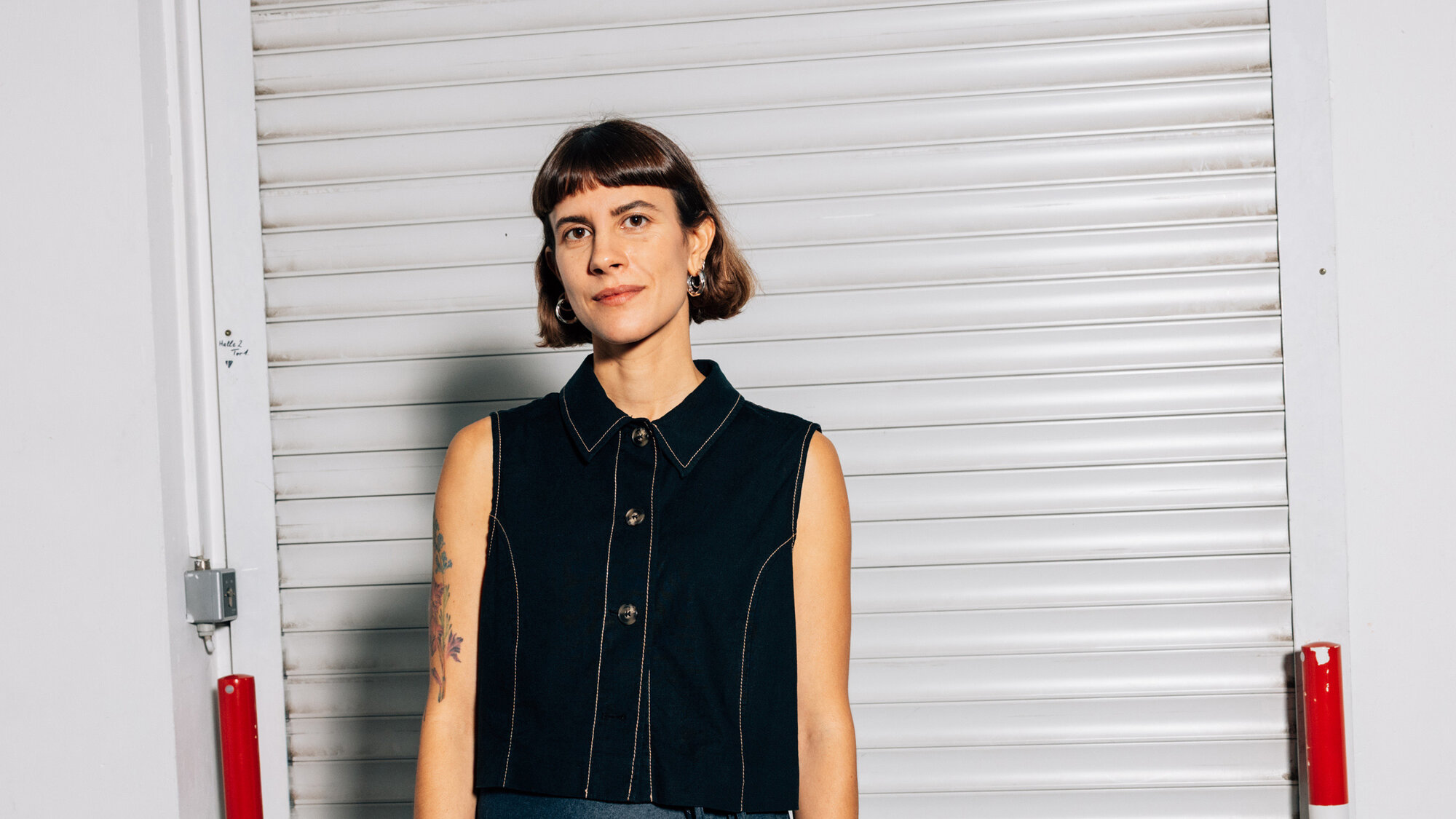
Nicole Schönherr

Textile Interfaces
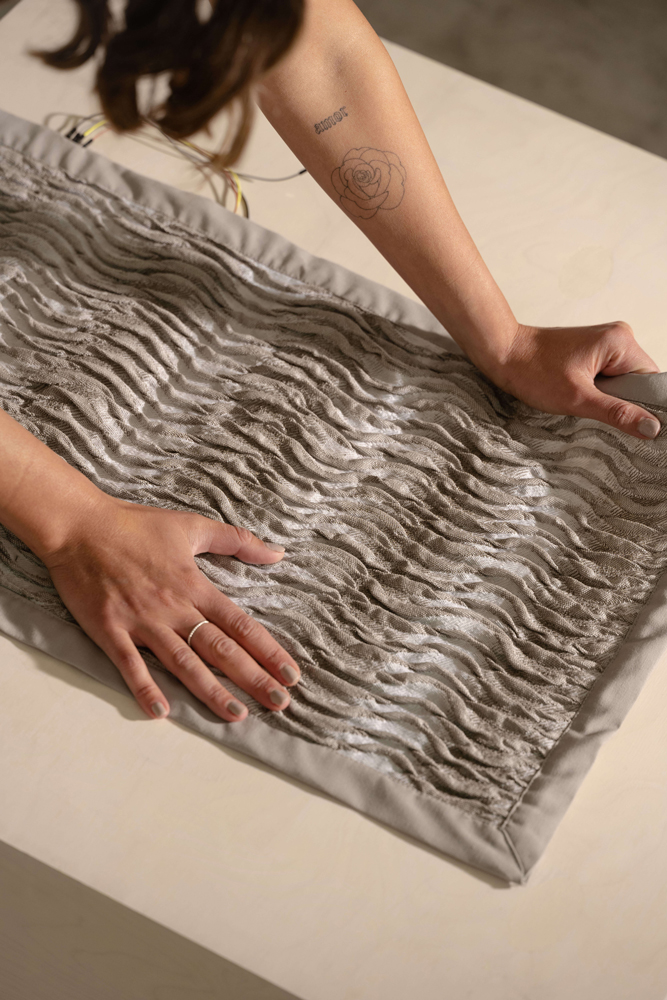
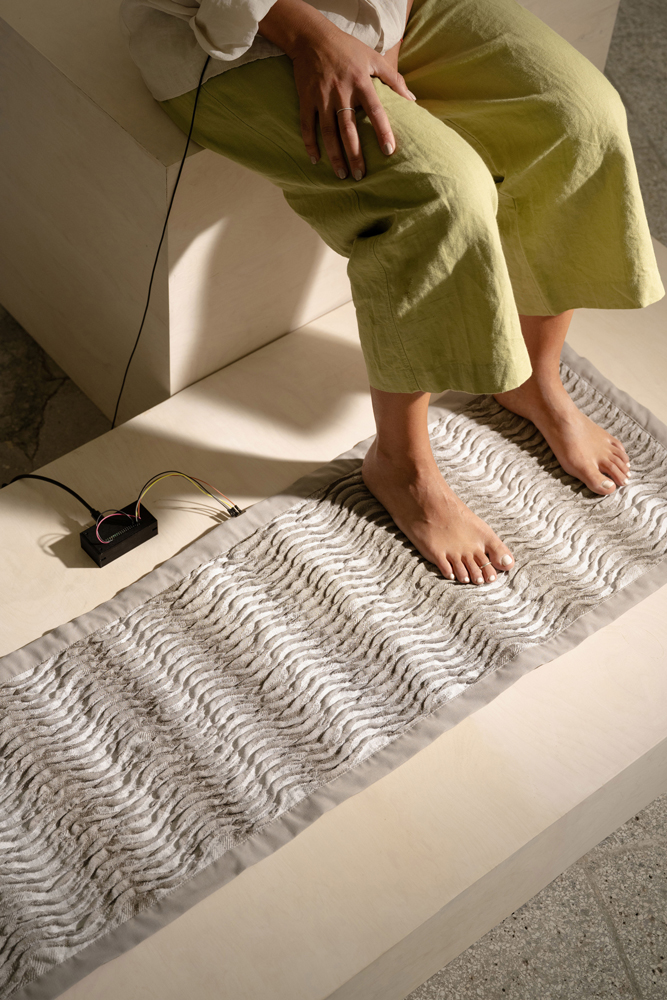
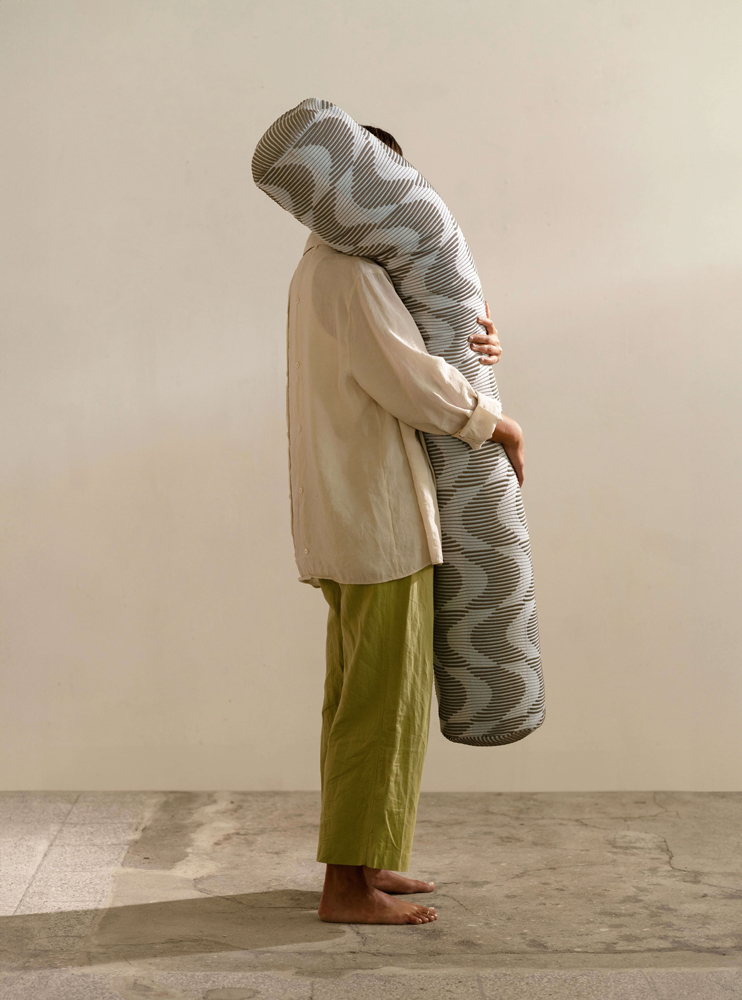
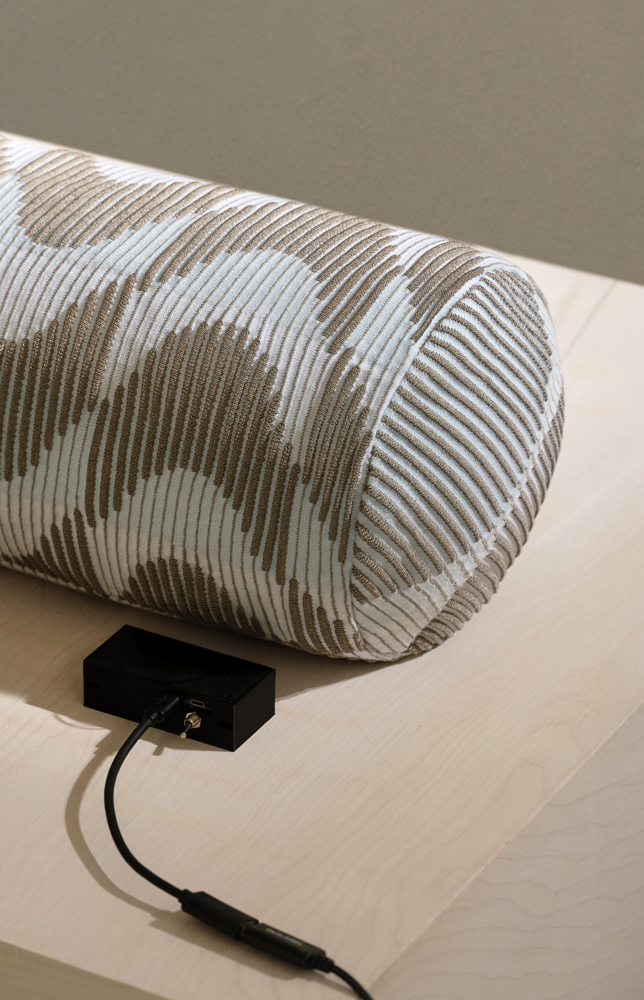
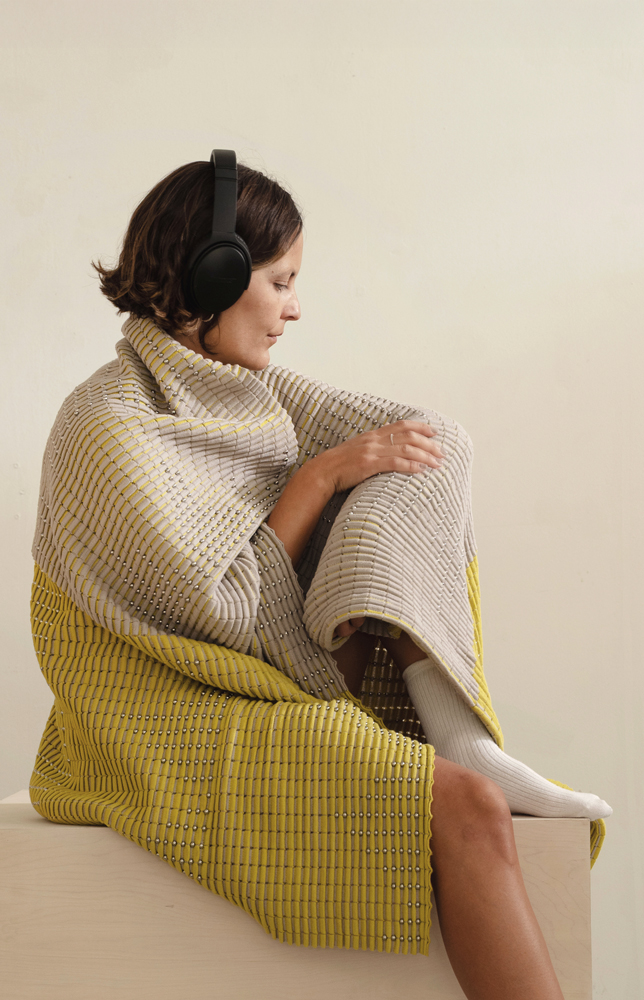
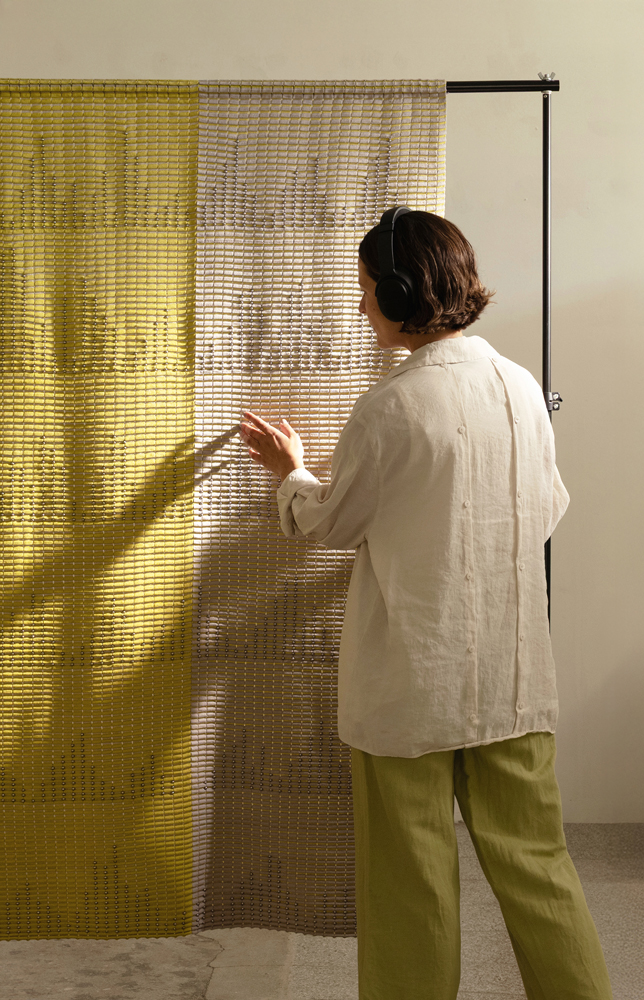
Nicole Schönherr works with textiles, touch and sound. In her master’s project, Talking Textiles, she developed three textile pieces with surfaces that respond to touch through different sounds. The works combine tactile structures, sensors and ASMR-triggering audio.
Material and construction are informed by how a surface feels and the sound it produces when touched. The pieces are designed to encourage calm and support self-regulation.
For SOFT/SIGNAL, Schönherr developed 14 textile samples using conductive and non-conductive materials. She works with weaving, knitting and embroidery techniques, recording the sounds produced when each surface is touched. Other projects focus on biomaterials and alternative production methods. Schönherr studied design in Santiago de Chile and completed her master’s degree in Textile and Material Design at Weißensee School of Art and Design Berlin.
You combine textiles with touch and sound. How did you arrive at this combination?
The idea came mainly from thinking about properties of textiles that aren’t immediately obvious. I therefore wanted to explore their sonic dimension and create a multisensory relationship by including touch. Since the beginning of my master’s degree, I’ve also been particularly interested in the therapeutic potential of textiles, and I’ve wanted to work with ASMR-triggering sounds because I use them myself to relax.
What can textiles achieve as an interface that a screen cannot?
Textiles can create a multisensory relationship that a screen can’t. Haptic interaction also brings the body into the experience — textures guide the hand intuitively, and touch lets people actively shape what they feel and hear. ASMR is mainly experienced on audio platforms and YouTube, so I found it interesting to translate it into something tactile. The shift from watching or listening to touching could make more people willing to try it.
Talking Textiles is designed to have a calming effect and support self-regulation. How do you verify whether it actually works?
So far, I haven’t had the resources to test the effect directly, so my approach is based on papers I’ve read about the benefits of ASMR and haptic interaction. ASMR has become popular enough to attract psychologists and researchers in the field. The next step is a formal study, which is already being planned — I can’t share much yet, but there will be more to say soon.
At what point does a product designed for wellbeing need scientifically proven effects?
I think it depends on how a product is positioned. If it’s meant as a treatment or a medical tool, it should go through a formal study to show that it actually helps people and is safe. For something more holistic that carries no risk of harm, a study is a valuable addition rather than a requirement, since it can reveal who it works best for and why. I’m personally interested in carrying out research on the relaxing effect of my pieces.
05 People react very differently to touch and sound. How do you take these differences into account?
ASMR doesn’t affect everyone in the same way. Studies suggest it can be very calming for some and irritating for others, depending on their tastes and personality traits. The same goes for haptic textures. That’s why I’m interested in understanding which sounds and textures work best for whom, so the experience can eventually be adapted to each person.
Conductive yarns and electronics make repair and recycling more difficult. How do you address this contradiction?
It’s a real challenge and a very important topic for me. I haven’t been able to focus on it yet, but I’m already thinking about it for the next stages of the project. So far, I’ve been in contact with researchers studying the recycling of conductive fibres, who have given me very valuable input, and I’d like to explore modular systems where the conductive parts can be detached for easier repair and dismantling.
In Vaivén, you explore premenstrual symptoms. What responsibility does design have when it addresses health issues?
For Vaivén, a project I created together with Paulina Meyle, we used aromatherapy, a more holistic approach to health, to help calm the emotions related to PMS. I think design’s responsibility there is to be honest about its limits — to provide support alongside medical care, not instead of it — and to build on real knowledge, which is why we developed the fragrances with an aromatherapy expert at Smell Lab Berlin.