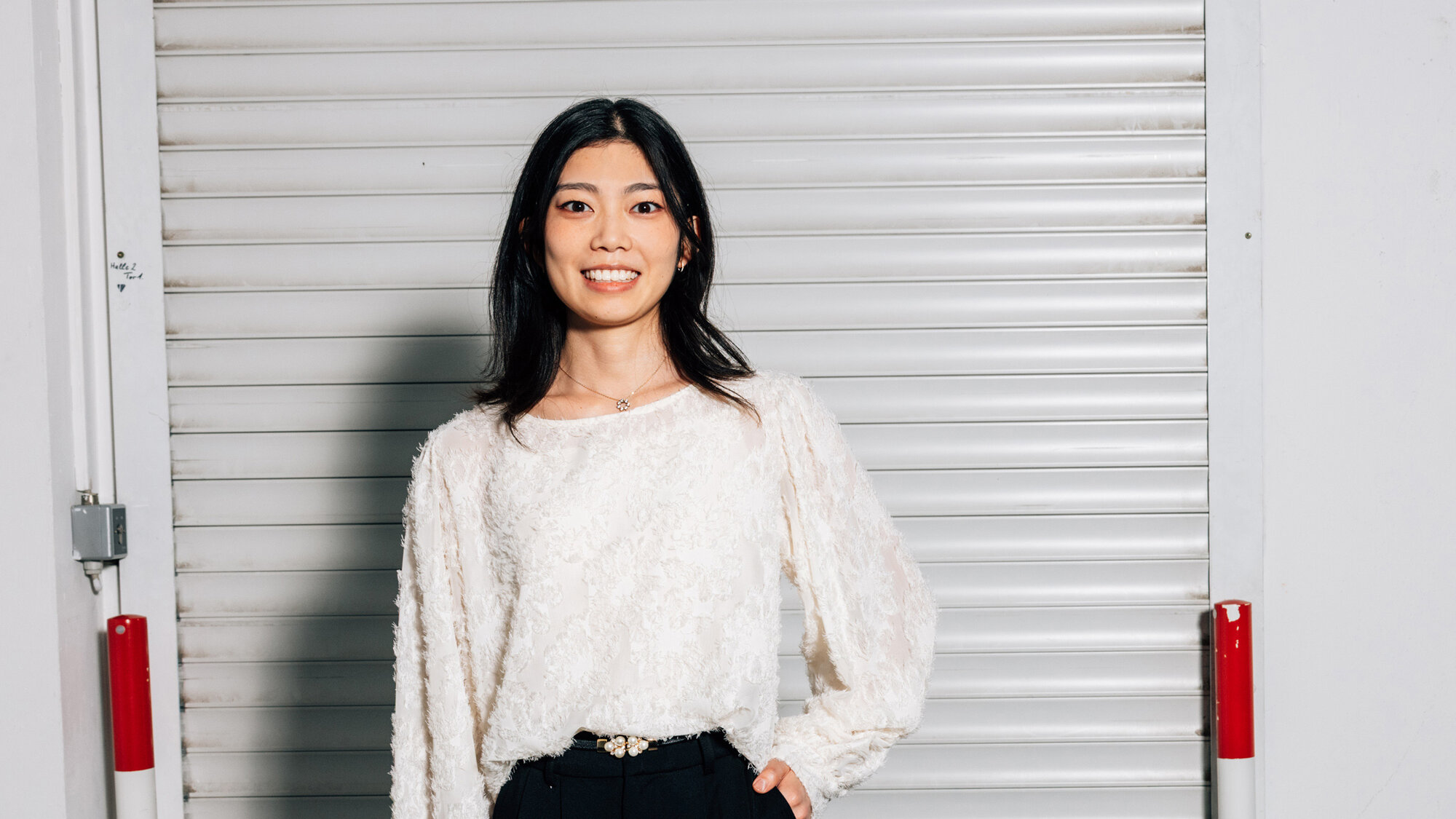
Fumino Hasegawa
Time and Material
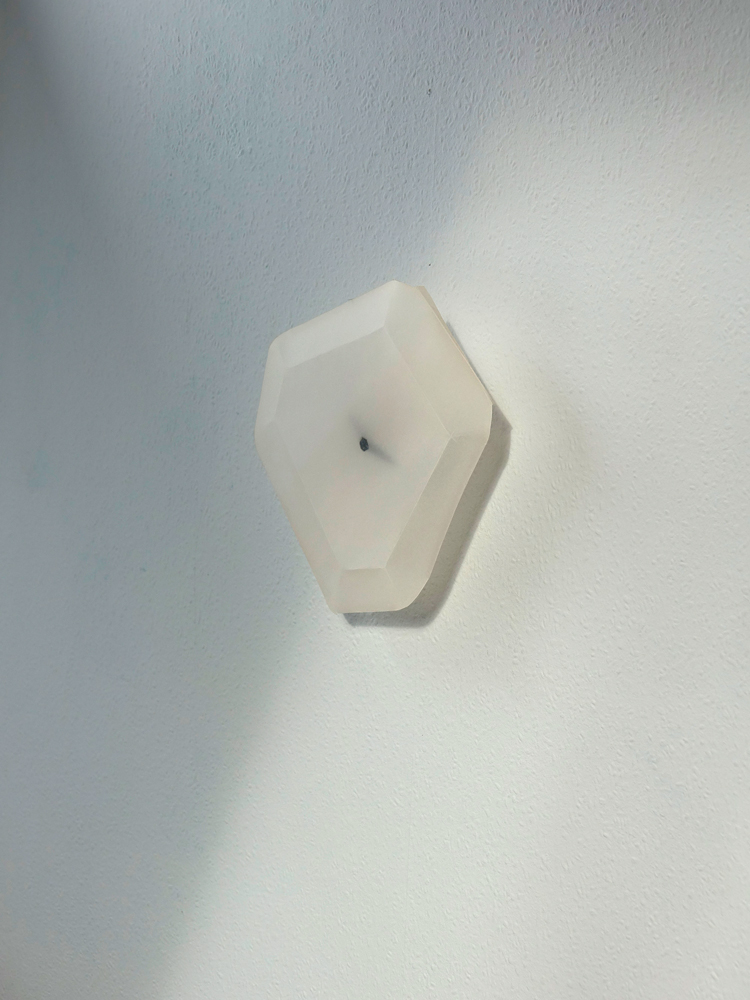
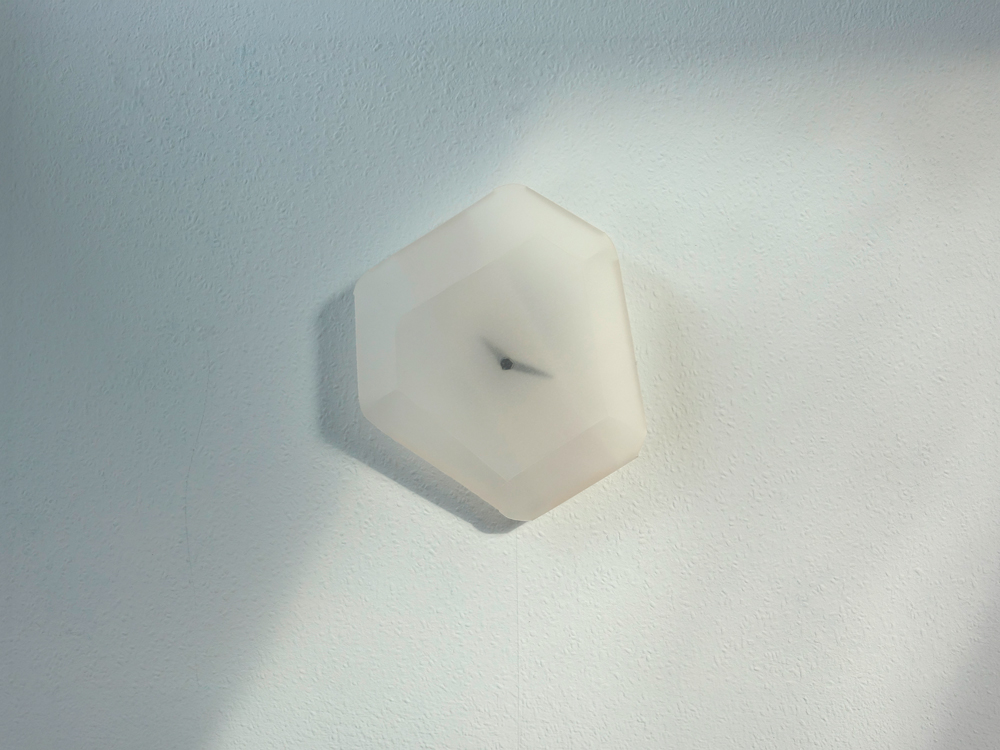
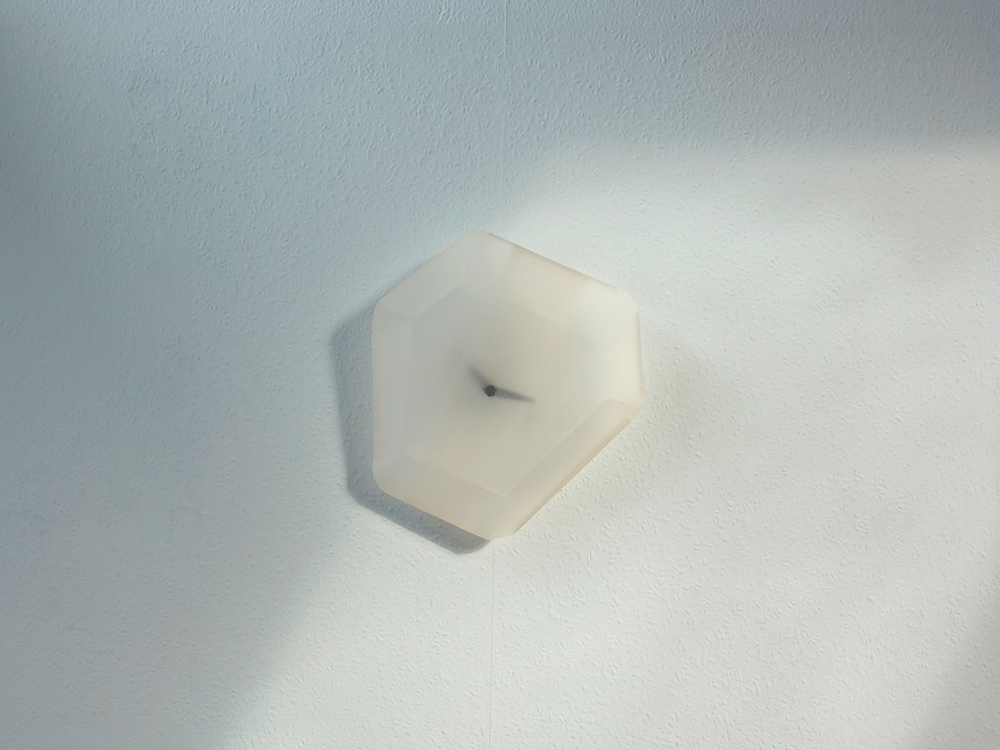
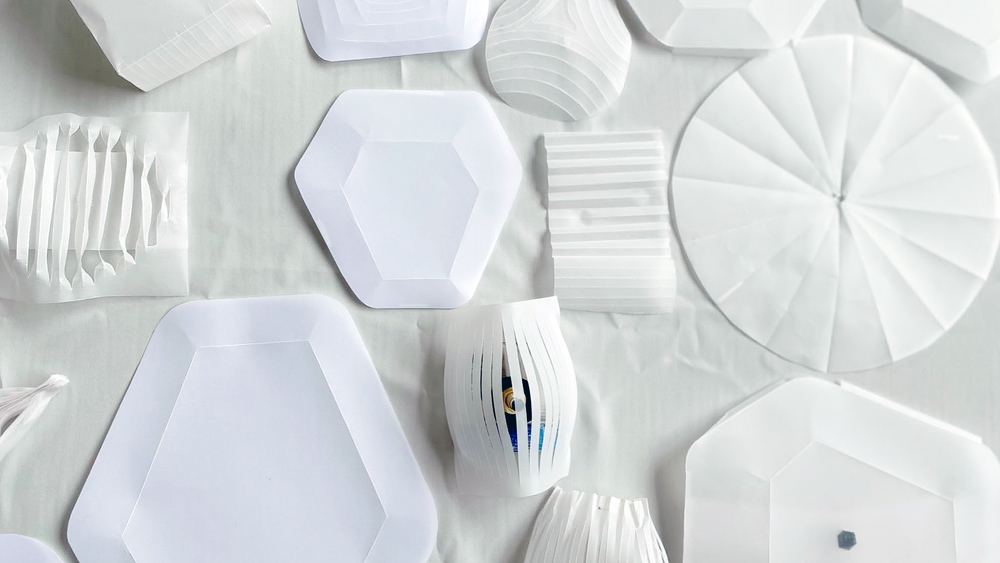
Time and material are recurring starting points in Fumino Hasegawa’s work. Blurred Time is a clock made with folded translucent paper that moves continuously. As the layers rotate and overlap, they create changing forms and shadows. Rather than displaying the exact time, the object focuses on its passage.
Her master’s project, The Space Between, draws on the Japanese concept of Ma – the space between objects, actions or events. Hasegawa applies this idea to a tea ritual. A steam-responsive paper lid and vessels made from porcelain and washi accompany the period in which the tea cools.
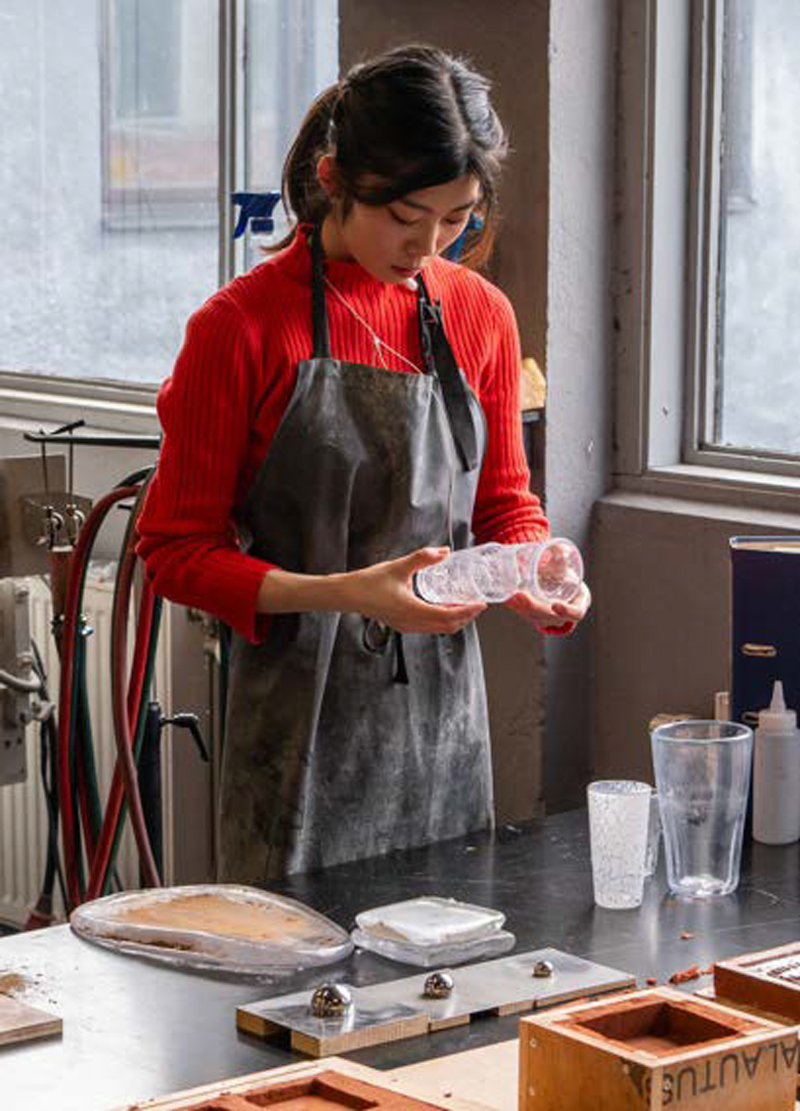
In Bubla, Hasegawa works with air bubbles in glass. Developed in collaboration with Glasmanufaktur Harzkristall, the vessels use bubbles that are deliberately created and positioned within the material. Hasegawa studied Product Design at Kyoto University of the Arts and is completing her master’s degree in Product Design at Weißensee School of Art and Design Berlin.
Many of your projects explore time, waiting and change. Where does this interest come from?
My interest in these themes developed during my time in Kyoto, particularly during COVID-19. Kyoto was unusually quiet back then because there were hardly any tourists. This gave me the opportunity to gain a deeper understanding of traditional Japanese culture and craftsmanship. At the same time, I was reflecting on my own identity. Personal experiences, such as losing someone close to me and saying goodbye to Kyoto, also shaped my perception of time. I became aware of how much our personal circumstances and emotions influence the way we perceive and experience time.
In The Space Between, the time spent waiting for tea becomes part of the experience. What can design gain by not making everything faster?
Through the tea ceremony, I learned how important the space in between, known as Ma (間), is. The pauses between individual actions create space to find calm and reorient ourselves. This helped me become more aware of my surroundings and appreciate small things more. I believe design can achieve something similar. It doesn't always have to make everything faster and more efficient; it can also invite us to pause and be more mindful of our surroundings and the people around us in our hectic everyday lives.
How does a new project begin for you: with an observation, a material or a specific idea?
Most of my projects don't begin with a specific idea. Instead, they develop through observation and experimentation with materials. I enjoy working hands-on and letting the process guide me. I often photograph small details, unusual material properties or fleeting moments in everyday life where I see design potential. I also enjoy exploring Japanese concepts such as Ma (間), the space between things, and Hakanasa (儚さ), the beauty of fleeting moments. I collect these observations and thoughts until new connections emerge and, little by little, develop into a project idea.
You combine influences from Japan and Germany. How does that shape your view of design?
My experiences in Japan and Germany have introduced me to different cultural perspectives and approaches to design. I like engaging with the people, materials and cultural contexts around me, and I see design as a dialogue between them and my own perspective. Of course, there are differences in how things are perceived and experienced. That is why I find it exciting to bring these differences into dialogue through design and allow new perspectives and interpretations to emerge.
In Bubla, air bubbles in glass become a design element. What interests you about mistakes and unexpected outcomes?
What interests me about mistakes and unexpected outcomes is that they often open up new possibilities. Working with glass in particular has taught me to respond flexibly to the material and embrace its unique character. With Bubla, there were experiments in which the air bubbles didn't remain visible or the glass broke as it cooled. Through these experiences, I discovered a new method of keeping the bubbles visible while also ensuring the glass remained stable. I learned to trust the process and stay open to unexpected results.
Some of your objects change or disappear during use. How does that fit with the demand for long-lasting design?
In some of my projects, I explore why we keep certain things for a long time while others are quickly discarded. In Japan, I experienced how important it is to care for shared spaces and treat objects with respect. For me, the Japanese concept of Hakanasa (儚さ) describes the beauty of transience. Objects change through use and develop traces that tell their stories. I'm interested in how these changes shape our relationship with things. I want to show that wear and transience are not flaws but can also have an aesthetic quality.
What would you like people to perceive differently through your objects?
It's important to me that people pick up my objects, look at them and take the time to discover them. My work is often delicate and finely crafted, with its quality lying in its aesthetics and small details. Since everyone brings different experiences and backgrounds, perceptions can be very individual. Through my approach, I want to draw attention to things that often go unnoticed in everyday life and encourage people to become more aware of their surroundings and form a personal connection between person and object through touch, observation and experience.