
Shirin Frangoul-Brückner: How Architecture Moves People

Why do some places stay with us long after we've left, while others fade from memory within minutes?
Why do we step into certain buildings with curiosity, even before we know what awaits inside? For Shirin Frangoul-Brückner, co-founder and Managing Director of ATELIER BRÜCKNER, the answer has little to do with spectacular forms or extraordinary materials. Good architecture begins where it connects with people.
This philosophy also shaped Uzbekistan's pavilion for Expo 2025 Osaka, which received Gold at the German Design Awards. Titled Garden of Knowledge, the pavilion presents Uzbekistan as a nation in transformation. It brings together cultural heritage and future ambitions, traditional craftsmanship and contemporary architecture, sustainability and social relevance. Yet the project's true strength lies somewhere deeper. "It's not just about communicating content," says Frangoul-Brückner. "It's about bringing people together, creating encounters and establishing a dialogue between content, place and visitor."
At a World Expo, this is no small challenge. Surrounded by more than a hundred participating nations, visitors often decide within seconds which pavilion deserves their attention. Architecture becomes a tool that attracts, guides and activates people. It becomes a design nudge.
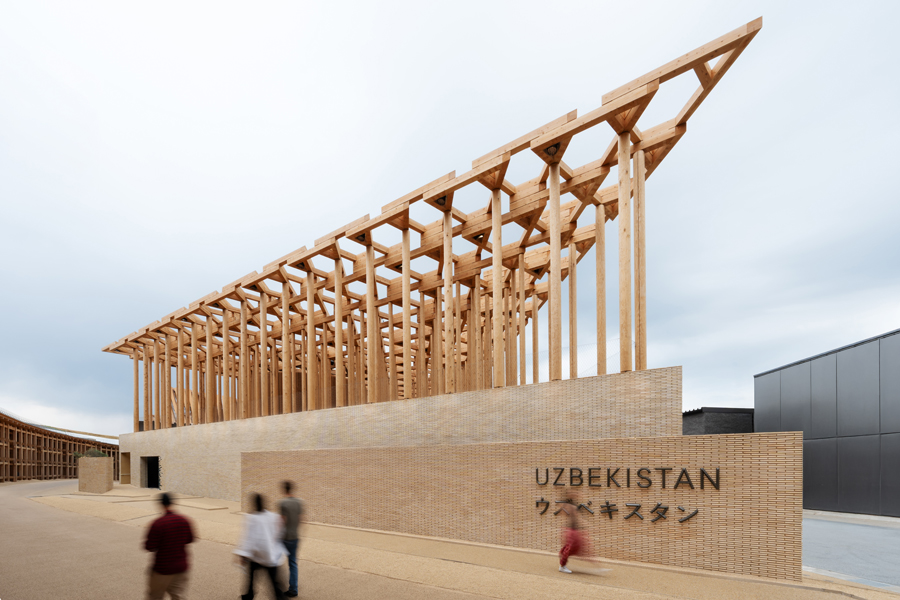
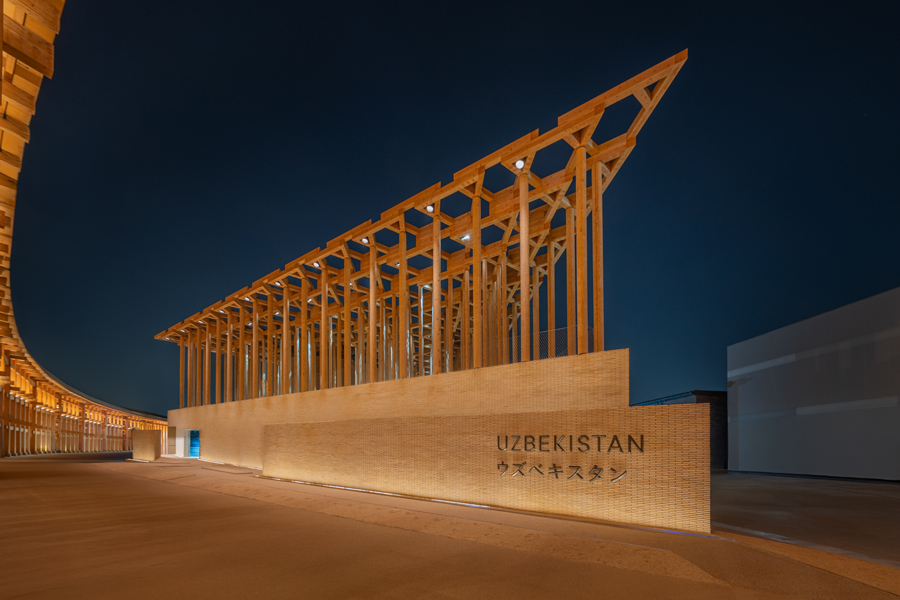
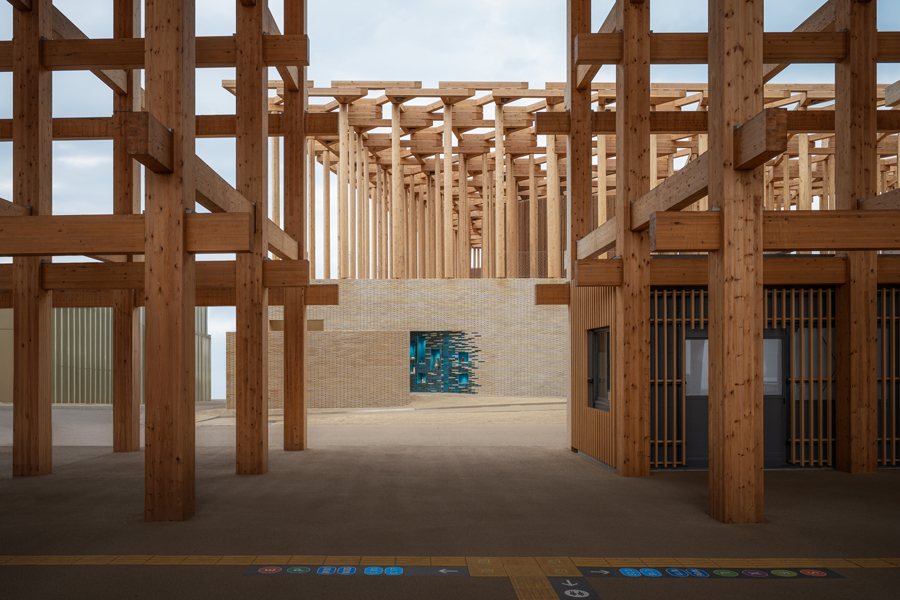
The Uzbekistan Pavilion is built on exactly this principle. Its striking timber structure is visible from afar. The open construction draws visitors in without demanding attention. It sparks curiosity before a single message is communicated. For Frangoul-Brückner, this is intentional. "We created an iconic piece of architecture that first attracts people through its image. Only then do we have the opportunity to engage them with the content."
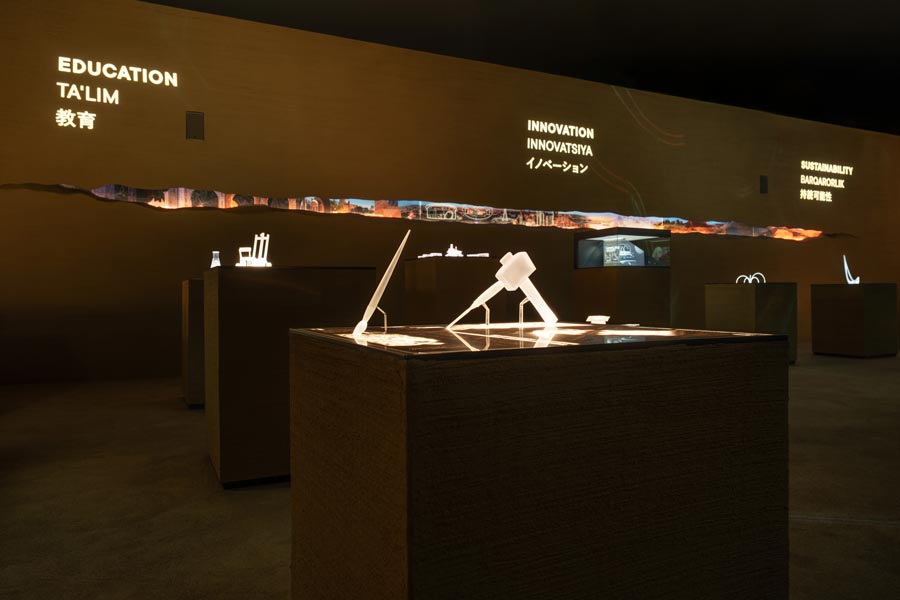
The pavilion works as an invitation. Visitors enter because the architecture intrigues them. Only afterwards do they begin exploring the themes behind it: science, education, cultural heritage and the transformation of a country redefining its future. In this sense, architecture becomes the first chapter of a story.
For Frangoul-Brückner, design is not an act of self-expression. Quite the opposite. One of the greatest challenges, she argues, is putting aside personal preferences and consistently designing from the user's perspective.
"We constantly have to ask ourselves: who are we doing this for? It's not about expressing ourselves. It doesn't even have to please us. It has to reach people."
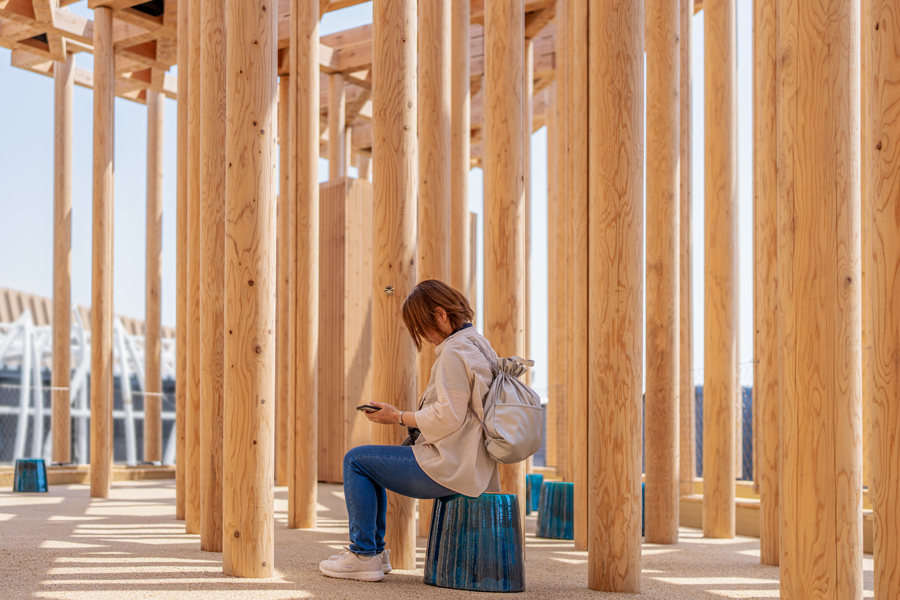
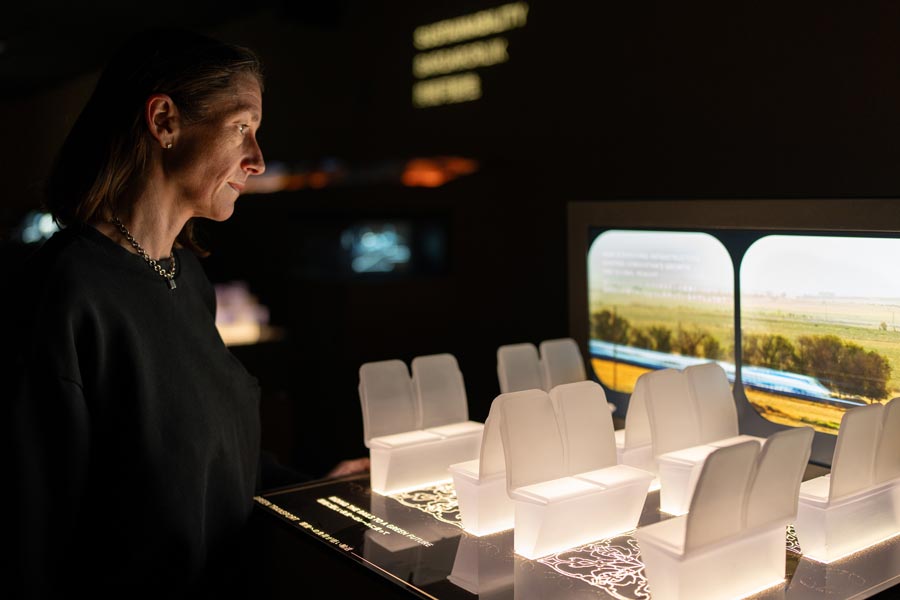
This mindset runs through every aspect of the pavilion. The architecture is open, transparent and accessible. It creates participation rather than distance. Visitors do not move through a closed object but through a space designed for exchange, discovery and multiple perspectives.

Identity Emerges from Context
For Frangoul-Brückner, meaningful architecture always starts with a place and its story. Identity cannot simply be invented or applied. It must emerge from context.
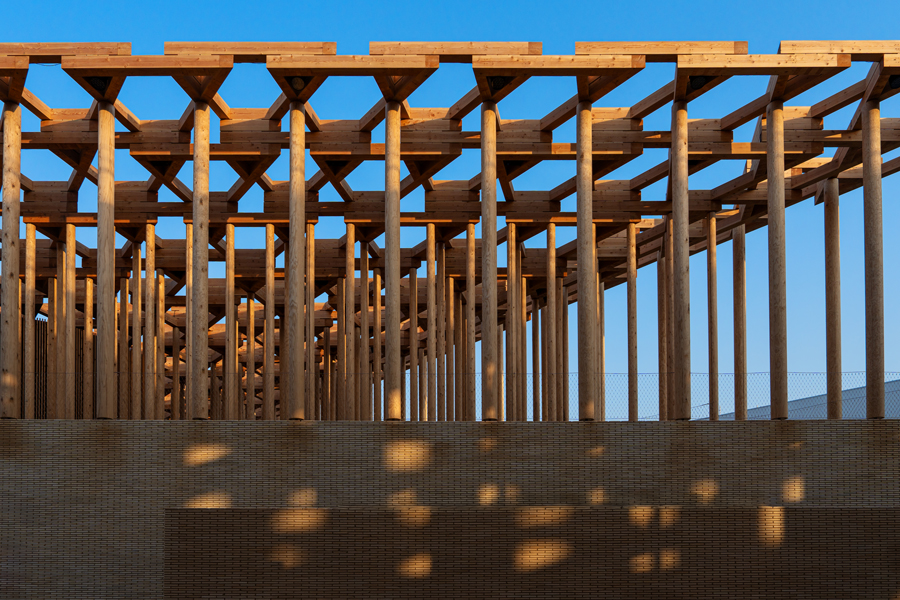
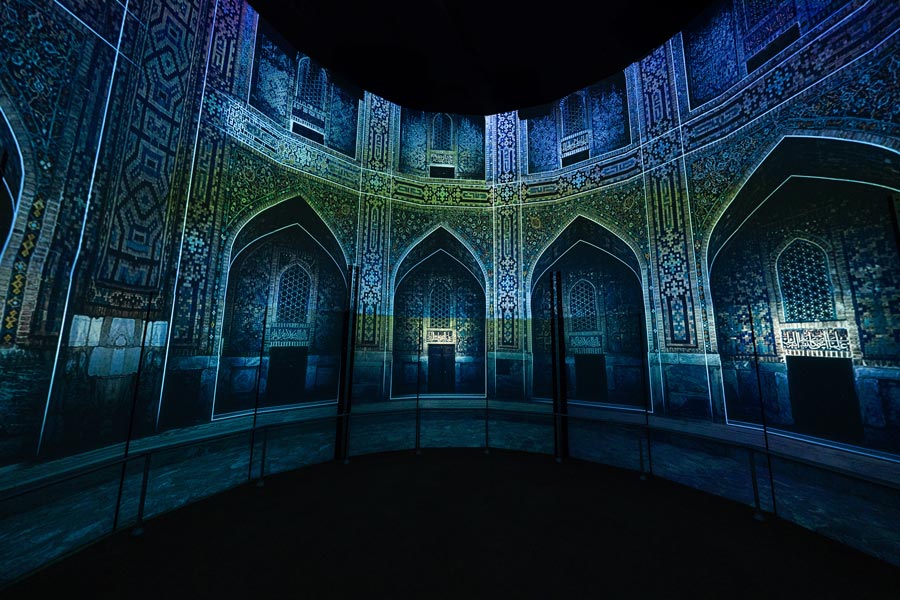
The Uzbekistan Pavilion illustrates this approach throughout. Its triangular footprint references the traditional Tumar, a protective amulet deeply rooted in Central Asian culture. The base of clay and brick represents the earth, heritage and cultural foundations of the country. Rising above it is an eight-metre-high forest of timber columns inspired by the temple and palace architecture found along the Silk Road, reinterpreted for a contemporary audience.
As visitors move through the pavilion, overlapping timber elements create constantly changing patterns and visual impressions. The building evolves with every perspective. Architecture becomes an experience rather than a static object.
For Frangoul-Brückner, these experiences are what make places memorable.
"The most remarkable places are not simply used. They are experienced."
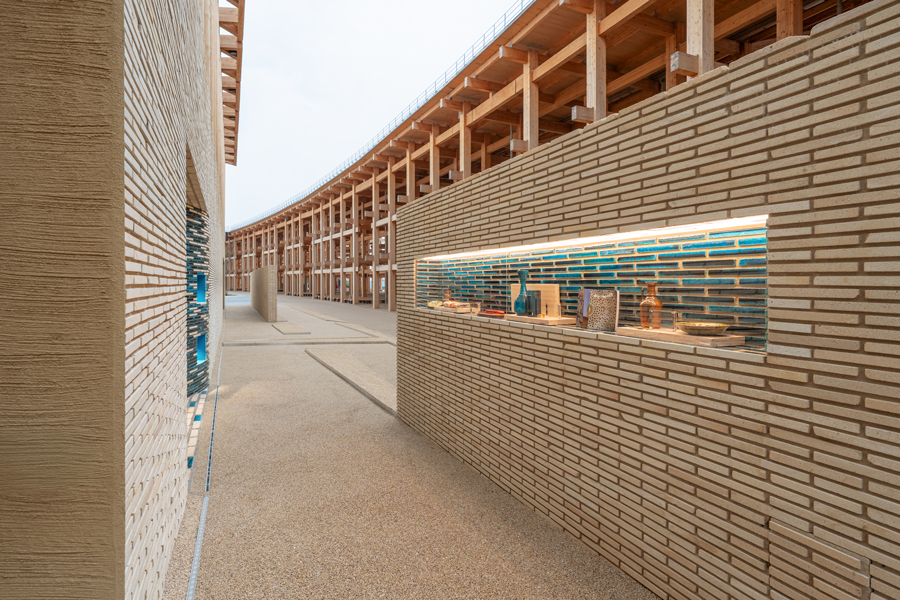
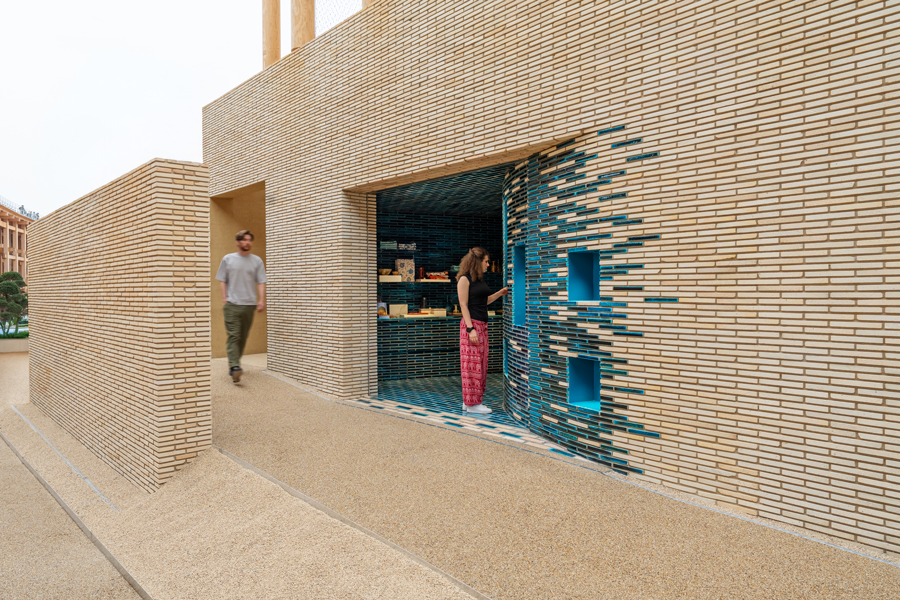
Different scales work together to achieve this. Architecture provides orientation within the urban context. It creates opportunities for encounter on a social level. And through light, materiality, proportion and atmosphere, it connects with people on a human level. Meaning emerges where these dimensions intersect.
The Garden of Knowledge also embodies this thinking through its sustainable construction. Timber, clay and brick are traditional Uzbek materials while simultaneously supporting a circular approach. After Expo 2025, all building components will either be reused or returned to biological and technical cycles. The timber structure is modular and can be reassembled elsewhere. Visitors can even trace the origin of every individual timber column via a digital tracking system.
Yet Frangoul-Brückner sees sustainability not as a technical feature but as part of a broader narrative. For her, the architecture of the future is not created by breaking away from the past, but by building upon it.
"It's about understanding cultural heritage and translating it into the future."
That is precisely what the Uzbekistan Pavilion achieves. It does not preserve tradition for tradition's sake. It makes heritage relevant for a new generation. It connects history with future ambitions, knowledge with experience and architecture with human interaction.

Does Your Project Show How Design Connects with People?
The Uzbekistan Pavilion demonstrates that design can be far more than a functional solution. Great architecture creates orientation. It builds identity. It makes complex ideas accessible and brings people together. Most importantly, it leaves a lasting impression.
These are exactly the kinds of projects celebrated by the German Design Awards. The awards recognise work that not only excels in design quality but also offers meaningful responses to the challenges of our time. Projects that connect with people, open new perspectives and set new standards.
If your project demonstrates how design can positively shape cultural, social or economic development, we invite you to submit it to the German Design Awards 2027.
Take the opportunity to present your work to an international jury and become part of a global network of design excellence.